
The Race for Bexar County DA: A Conversation with Candidate Shannon Locke
December 6, 2025
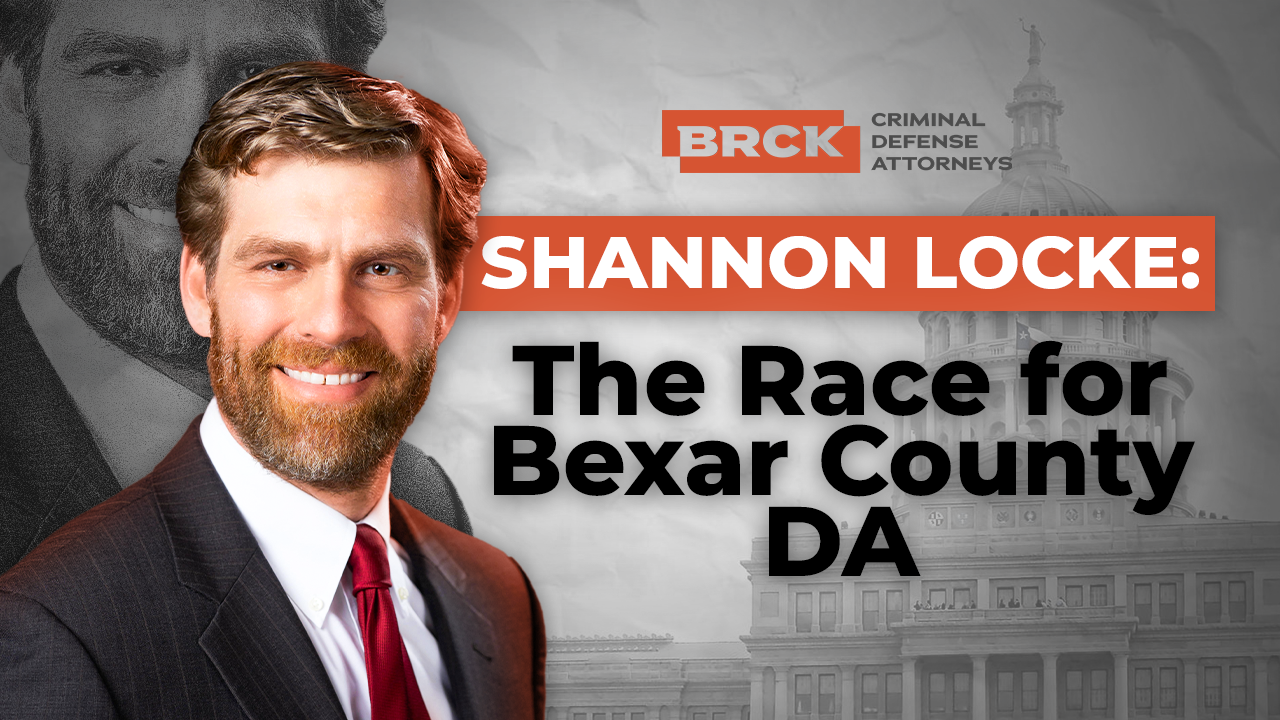
The criminal justice system in Texas is messy, and when you’re the one facing it, the last thing you want is an office that’s overwhelmed, inconsistent, or disconnected from the people it serves. This episode of So You Got Arrested kicks off an ongoing series exploring how leadership inside the Bexar County District Attorney’s Office shapes real cases, real people, and real outcomes.
As the DA race heats up, we’re inviting multiple candidates and courtroom insiders to talk openly about their vision for the office. In this episode, attorneys Scott Simpson and Stephen Barrera sit down with Shannon Locke, a board-certified criminal lawyer and longtime practitioner in Bexar County, who is running for District Attorney.
This blog is drawn from real conversations on So You Got Arrested, the criminal defense podcast hosted by BRCK Criminal Defense Attorneys.
Find us on Apple Podcasts, Spotify, and YouTube. Wherever you tune in, you’ll hear honest conversations about the Texas justice system from the people who see it up close.
The Crucial Role of the Bexar County District Attorney, Get Informed and Vote!
The DA isn’t just another elected official; they’re the person who decides which cases get charged, which ones get dismissed, how plea bargains are handled, and how aggressively certain offenses are prosecuted.
Under Texas law, district attorneys represent the State of Texas in criminal cases and have broad discretion in determining how those cases move forward. That means the DA influences:
- Whether a domestic violence case receives early intervention
- How quickly a case gets filed
- Whether evidence is tested or overlooked
- Whether prosecutors and police collaborate or face functional challenges
- How much trust the community has in the entire justice system
So yes, the DA race affects your safety, your rights, and the fairness of outcomes inside the courtroom.
How a Bexar County DA Shapes Domestic Violence Cases?
Domestic violence cases can be among the most emotionally complicated cases in the system. Under the Texas Family Code, “family violence” includes harm or threats between family members, household members, or intimate partners. But how these cases are handled depends heavily on the DA’s policies.
“Right now, no one is asking the right questions… Is this an abusive relationship? Is someone being exploited? What’s really going on here? ” — Shannon Locke, BRCK Podcast
Asking Better Questions in Domestic Violence Cases
Locke argues that prosecutors often focus on whether a witness is “cooperative,” a label that oversimplifies a very complex reality.
Instead, he proposes asking:
- Is this a pattern of abuse?
- Does the victim have resources or support?
- Is early intervention (like a protective order) more effective than waiting two years for a case to resolve?
Texas law allows victims to seek protective orders quickly, offering safety measures long before a criminal case concludes.
Early Intervention and Services
Locke argues that early assessments could reduce repeat violence and get victims resources sooner rather than letting problems “sit” in a six-month backlog before charges are even filed.
Why Case Backlogs Happen and How a DA Can Fix Them
Bexar County’s backlog isn’t a secret; thousands of cases wait months before they’re filed or reviewed. Locke explains the problem simply:
- Prosecutors are overwhelmed
- Too few attorneys handle too many cases
- Decisions get delayed
- Weak cases sit instead of being dismissed
- Serious cases lose momentum
He also stresses that the DA’s office should be able to quickly filter cases: “Not every case needs to go forward. Some need probation. Some need services. A few need trials, and those are where resources should go.”
Why Prosecutorial Discretion Matters
Texas prosecutors have legal authority to decide which cases to charge or dismiss. A smarter triage of the docket would allow ADAs to prioritize:
- Violent offenders
- Repeat offenders
- High-risk domestic violence situations
- Cases with strong evidence
At the same time, behavioral or low-level offenses might benefit more from diversion programs or probation.
Improving Communication Between Police and Prosecutors
One of the strongest conversation points in the podcast was the lack of collaboration between San Antonio PD and the DA’s office.
Locke explained that in places like Harris County, prosecutors are available 24/7 to advise police before charges are filed. That early communication prevents weak cases from clogging the system and helps police gather the right evidence from the start.
In Bexar County, however, prosecutors and police often don’t talk until months later, creating frustration on both sides.
“There’s been a divide, and a lot of it comes down to lack of communication. We need prosecutors and detectives working as a team.” — Shannon Locke, BRCK Podcast
Improving this relationship could lead to stronger cases, fewer dismissals, and less finger-pointing.
Why Public Trust in the DA’s Office Has Declined
Across San Antonio from Stone Oak to the West Side, Locke says he hears the same thing: People don’t trust the DA’s office. Some feel ignored. Some feel unheard. Some see cases dismissed with no explanation. Others see crimes in their neighborhood and feel like the system isn’t working.
A DA who understands the law and the community must address this directly.
How Transparency Can Restore Faith in the System
Locke emphasizes that the solution is simple but powerful:
“If people know why we’re making decisions even if they don’t like them, trust comes back.”
Instead of dismissing a case with no explanation, a transparent DA would hold news conferences, issue public updates, and explain strategies openly. Texas law doesn’t prevent transparency; it only requires prosecutors to protect sensitive details. Clear communication fills the gap where rumors and conspiracy theories often.
What the Bexar County DA Race Means for You
Whether you’re facing charges, supporting someone who is, or simply care about public safety, the DA race directly impacts:
- How quickly cases move
- How domestic violence cases are handled
- Whether police and prosecutors collaborate
- How resources are prioritized
- How safe and informed the community feels
- Whether victims and defendants feel respected
A DA who asks the right questions, not just “Can we win?” can reshape the entire system.



© BRCK Criminal Defense Attorneys | All Rights Reserved | Privacy Policy | Website Designed by Luna Creative